










 10-24-2026, 19:31

 Senior Member




NVIDIA GeForce RTX 3090 Ti Gets Nearly 80% FP16/BF16 Compute Boost With Linux-Based Unlocking Trick
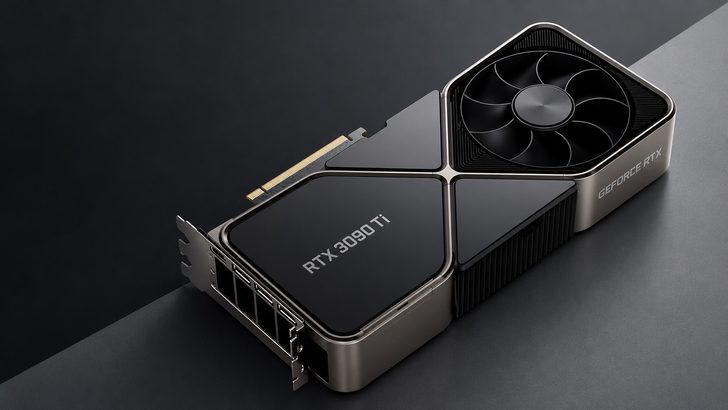
The new tool reportedly helps the RTX 3090 Ti's BF16 compute performance jump from 87.5 FLOPS to 157 TFLOPS while also improving the vLLM inference speeds by up to 36%.
Open-Source Project "GPU Unlock" Bypasses NVIDIA's Software-Level Restrictions on GeForce GPUs, Unlocking Professional-Grade Compute Capabilities
A new trick has been unlocked to bypass NVIDIA's software-level restrictions on consumer GeForce graphics cards. This has been achieved with a new open-source project called "GPU Unlock", which allows the GPUs to access higher half-precision floating-point compute performance, which typically is reserved for the professional workstation GPUs.
RELATED STORY NVIDIA GeForce RTX 30 GPUs Get Up To 2X Faster AI Compute Performance With New GPU Unlock Mod, Real-World Gains Of Up To 60%
According to the project's developer, "zagitta", NVIDIA restricts certain compute capabilities and virtual GPU (vGPU) features on consumer GeForce GPUs, despite sharing the same GPU architecture as the professional workstation cards. NVIDIA restricts these capabilities to the more expensive Quadra, Testa and RTX A-series GPUs. However, this new project takes a different approach from traditional driver.
"GPU Unlock" dynamically patches the NVIDIA driver module within the Linux kernel and intercepts requests for the GPU's physical PCIe Device ID before replacing the returned identifier with that of a compatible professional GPU. This basically tricks the driver into recognizing a consumer GeForce GPU as a professional NVIDIA card, bypassing the restrictions and unlocking additional compute capabilities.

As per the developer's claims, the performance improvements are substantial. On the GeForce RTX 3090 Ti, an Ampere GPU, the BF16 compute performance increases from 87.5 TFLOPS to a whopping 157 TFLOPS, which is a staggering 80% improvement. The TF32 performance also nearly doubles, rising from 42.6 TFLOPS to 82.6 TFLOPS. The GeForce RTX 3080 reportedly also benefits from this, and its FP16/BF16 performance increases from 65 TFLOPS to 110-113 TFLOPS, while retaining its default 320W power limit.
The benefits were also seen in the vLLM inference engine, where the tool unlocks 33-36% additional performance in long-context Prefill processing speeds and a 25% reduction in Time-To-First-Token latency. However, Decode performance remained mostly unchanged because the technique doesn't address memory bandwidth limitations.
That said, the GPU Unlock currently supports Linux only and works with GeForce GTX 900, GTX 1000, RTX 20, and RTX 30 series GPUs, while the RTX 40 and RTX 50 cards aren't supported.
News Sources: GitHub, HKEPC
That said, the GPU Unlock currently supports Linux only and works with GeForce GTX 900, GTX 1000, RTX 20, and RTX 30 series GPUs, while the RTX 40 and RTX 50 cards aren't supported.
News Sources: GitHub, HKEPC

 Return to Top